Epilepsies in children and young people: Investigative procedures and management
Keeping up to date
This guideline was published in 2021 and updated in 2026. The update focused on section 5: Pharmacological management.
The guideline will be considered for review in three years. The review history and any updates to the guideline in the interim period are noted in the update report.
Summary
This guideline provides evidence-based recommendations on the investigation and management of epilepsies in children and young people aged from one month to 19 years (remaining in secondary education), including:
- the role of imaging, neurophysiology and genetic testing in diagnosis
- antiepileptic drugs, ketogenic diet, surgery and vagus nerve/deep brain stimulation for the management of patients with drug-resistant epilepsy and status epilepticus
- identification and treatment of psychiatric comorbidities
- transition from child to adult care
- discussions about, and prevention of, sudden unexpected death in epilepsy.
Who it's for
- All health and social care professionals involved in the management of children with epilepsy, in primary and secondary care settings
- people involved in commissioning epilepsy services
- public health physicians.
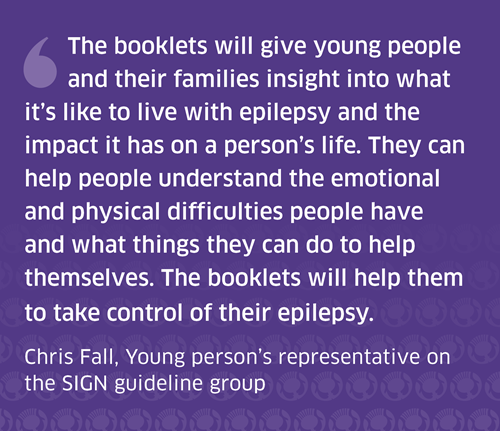
Young People's Experiences
Hear from our Young Person Representatives about their experiences of epilepsy services, and about how this guideline can help make improvements:
 Current 3-7 years
Some recommendations may be out of date, declaration of interests governance may not be in line with current policy.

Supporting Material
- SIGN 159 update report 2026 (PDF)
- Consultation May 26 report (PDF)
- Declaration of interest (PDF)
- Search strategies (PDF)
- Search flow chart (PDF)
- Consultation Feb 19 Report (PDF)
- Consultation Nov 18 Report (PDF)
- The Psychology Adding Value – Epilepsy Screening (PAVES) and early intervention for children and young people with epilepsy at risk of mental health problems